


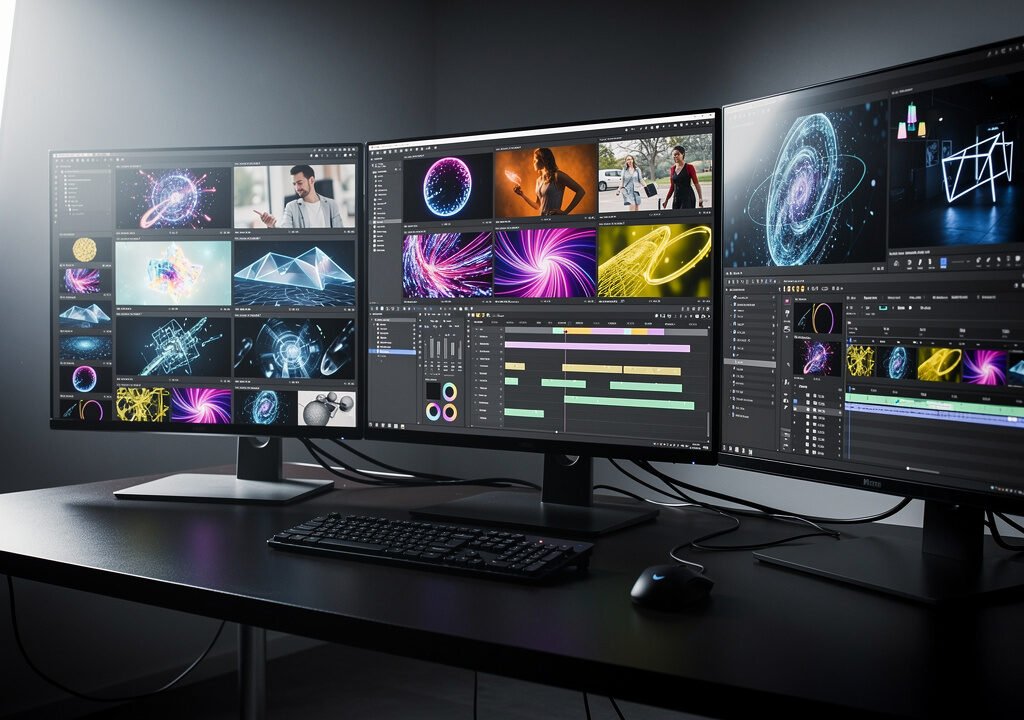
Generative AI is revolutionizing the creative landscape in 2025, with groundbreaking advances in text-to-image and text-to-video generation transforming how we produce visual content. From OpenAI’s Sora to Runway’s latest innovations, these AI systems are pushing the boundaries of what’s possible in digital content creation.
The Evolution of Generative AI Technology
The journey of generative AI has been remarkable. According to OpenAI’s research on Sora, their text-to-video model can create incredibly realistic videos up to 60 seconds long from simple text descriptions. This represents a quantum leap from earlier text-to-image systems.
Current Generative AI Capabilities
- Text-to-Image: High-resolution image creation from text prompts
- Text-to-Video: Fluid motion and realistic scenes from descriptions
- Audio Generation: Music and sound effects from text
- 3D Model Creation: Complex objects from natural language
Moreover, these capabilities continue to expand. Learn more about the ethical implications of generative AI.
Breakthrough Applications of Generative AI
The applications of this technology span multiple industries. According to Anthropic’s latest research, generative AI systems are becoming increasingly sophisticated in understanding context and maintaining consistency.
Industries Transformed by Generative AI
- Entertainment: Film production and visual effects
- Marketing: Dynamic content creation
- Education: Interactive learning materials
- Product Design: Rapid prototyping
Furthermore, these applications are just the beginning. Explore more generative AI applications.
The Future Landscape of Generative AI
Looking ahead, generative AI technologies are poised for even more dramatic advances. Integration with other AI systems, improved coherence, and enhanced control over generated content are key areas of development.
Emerging Trends in Generative AI
Several trends are shaping the future of this technology:
- Enhanced temporal consistency in video generation
- Better understanding of physical laws and real-world dynamics
- Improved user control and editing capabilities
- Integration with virtual and augmented reality
Additionally, researchers are focusing on reducing computational requirements while improving output quality. Learn about AI model training techniques.
Challenges and Considerations
Despite rapid progress, generative AI faces several challenges:
- Ethical concerns regarding deepfakes and misuse
- Computing resource requirements
- Copyright and ownership questions
- Quality consistency across generations
Consequently, addressing these challenges will be crucial for the technology’s sustainable development.
Conclusion
The future of generative AI is incredibly promising, with technologies like Sora and Runway leading the way. As these systems continue to evolve, they will unlock new possibilities in creative expression and content generation. The key will be balancing innovation with responsible development and ethical considerations.












No Comments