


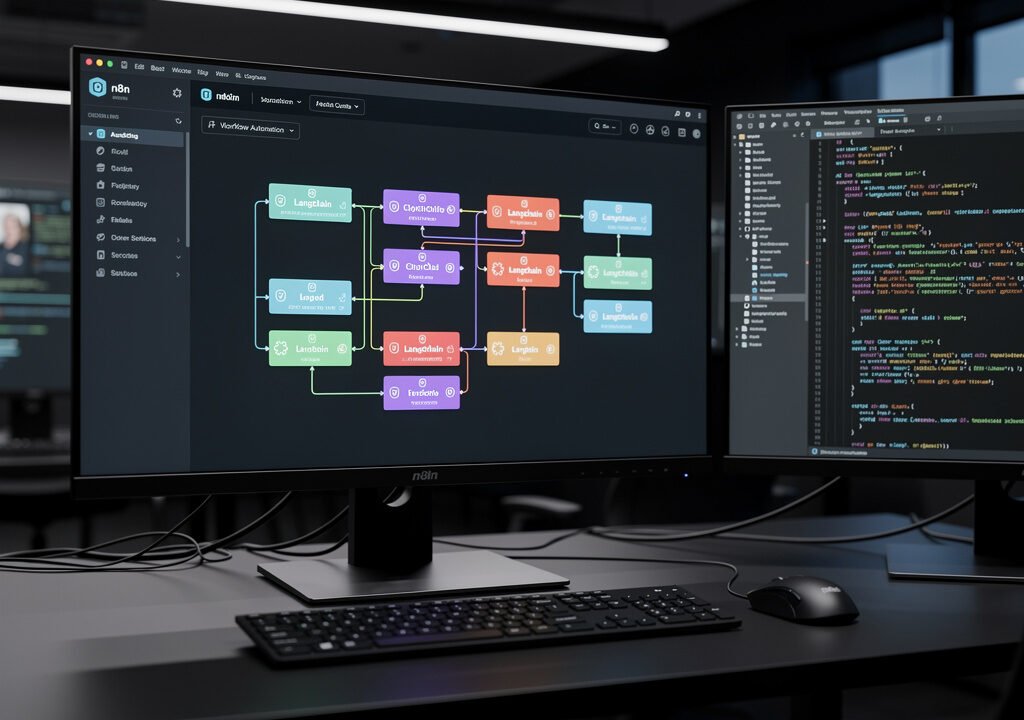
Building an AI agent with n8n and LangChain has become increasingly accessible in 2025, enabling developers to create powerful automation workflows enhanced by artificial intelligence. This comprehensive guide will walk you through the process of constructing your first AI agent using these cutting-edge tools.
Understanding AI Agents with n8n and LangChain
AI agents represent a new paradigm in workflow automation, combining the power of large language models with customizable automation tools. According to n8n’s official documentation, these agents can handle complex decision-making processes while automating repetitive tasks.
Essential Components of AI Agents
- n8n Workflow Engine: The foundation for creating automated processes
- LangChain Framework: Enables AI model integration and chain-of-thought processing
- API Connections: Links to various services and data sources
- Custom Logic: Business rules and decision-making parameters
Furthermore, understanding these components is crucial for successful implementation. Learn more about LangChain fundamentals.
Setting Up Your First AI Agent
To begin building your AI agent, you’ll need to configure your development environment. According to LangChain’s documentation, the process involves several key steps:
Initial Configuration Steps
- Install n8n and LangChain dependencies
- Set up API keys and authentication
- Configure your development environment
- Create your first workflow template
Moreover, proper configuration ensures smooth integration between components. Explore detailed API setup instructions.
Creating Advanced AI Agent Workflows
Once the basic setup is complete, you can begin building more sophisticated workflows. These may include:
- Natural language processing tasks
- Automated decision-making processes
- Data analysis and reporting
- Customer service automation
Additionally, implementing error handling and monitoring ensures robust performance in production environments.
Best Practices for AI Agent Development
Follow these essential guidelines for optimal results:
- Implement proper error handling
- Monitor agent performance metrics
- Document your workflow logic
- Test extensively before deployment
Consequently, adherence to these practices leads to more reliable and maintainable AI agents.
Optimizing Your AI Agent
Performance optimization is crucial for AI agent efficiency. Consider these factors:
- Response time optimization
- Resource usage management
- Scalability considerations
- Cost optimization strategies
Therefore, regular monitoring and adjustment of these parameters ensure optimal performance.
Conclusion
Building an AI agent with n8n and LangChain opens up new possibilities for automation and artificial intelligence integration. By following this guide and continuing to experiment with different configurations, you’ll be well-equipped to create sophisticated AI agents that can transform your workflow automation processes.














No Comments