

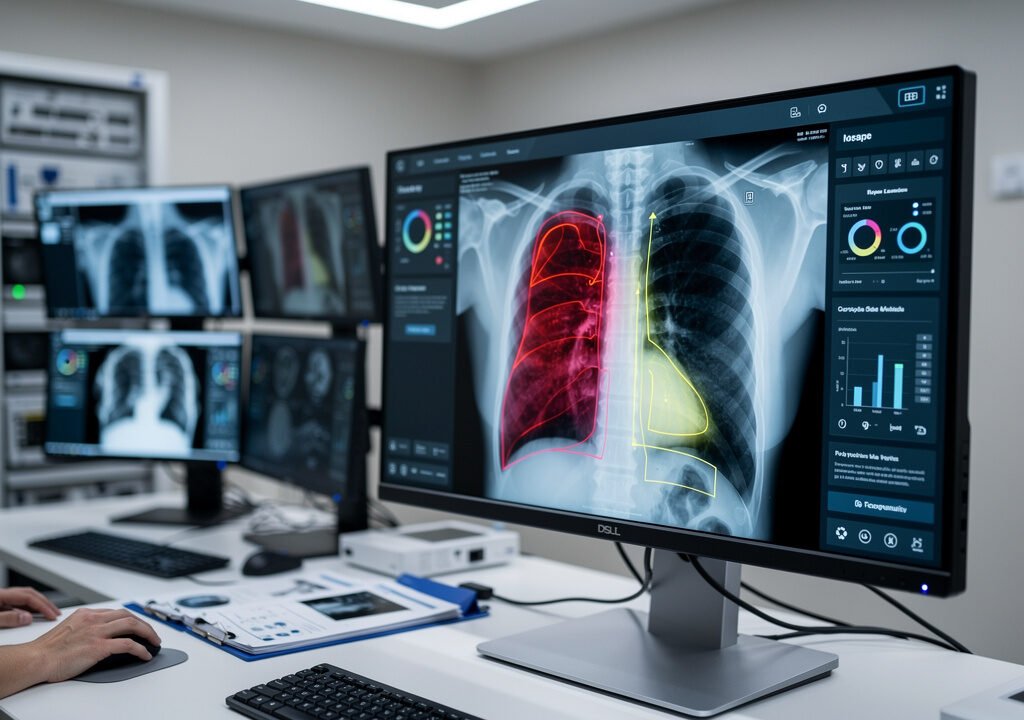
Machine learning in healthcare is revolutionizing medical diagnosis and treatment in 2025, ushering in a new era of precision medicine. From early disease detection to personalized treatment plans, AI-powered healthcare solutions are transforming patient outcomes and clinical workflows across medical institutions worldwide.
How Machine Learning is Transforming Healthcare Diagnosis
According to research published in Nature Medicine, machine learning algorithms now achieve diagnostic accuracy comparable to expert physicians in several medical specialties. These AI systems can analyze medical imaging, patient records, and clinical data with unprecedented speed and precision.
Key Applications of Machine Learning in Healthcare
- Medical Imaging Analysis: AI algorithms detect abnormalities in X-rays, MRIs, and CT scans
- Disease Prediction: Machine learning models identify risk factors and predict potential health issues
- Treatment Planning: AI-powered systems recommend personalized treatment protocols
- Drug Discovery: Advanced algorithms accelerate pharmaceutical research and development
Furthermore, Stanford’s AI in Medicine program demonstrates how machine learning enhances clinical decision-making. Learn more about AI diagnostic systems.
Benefits of Machine Learning in Clinical Practice
Healthcare providers implementing machine learning solutions report significant improvements in diagnostic accuracy and treatment outcomes. Moreover, these technologies reduce medical errors and optimize resource allocation.
Machine Learning for Preventive Healthcare
Predictive analytics powered by machine learning enables proactive health monitoring and early intervention. Explore preventive medicine applications.
Challenges and Future Developments
While machine learning in healthcare shows immense promise, challenges remain regarding data privacy, regulatory compliance, and clinical validation. However, ongoing research and technological advances continue to address these concerns.
Looking ahead, machine learning will increasingly integrate with emerging technologies like genomics and wearable devices, creating more comprehensive healthcare solutions. Healthcare professionals must stay informed about these rapidly evolving capabilities to provide optimal patient care.













No Comments