


What Are AI Agents and Chatbots?
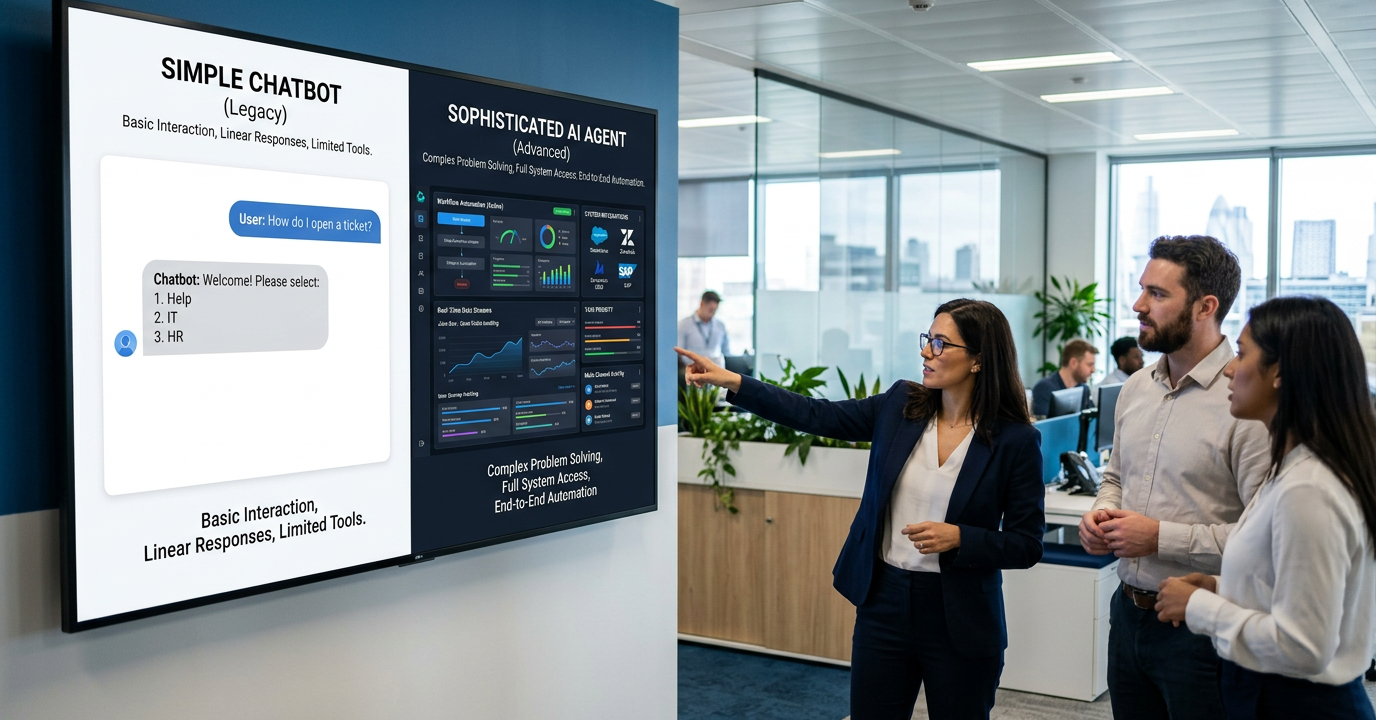
AI agents vs chatbots differences. The differences between AI agents and chatbots are becoming more important as businesses adopt conversational AI technologies. While both tools are valuable, they serve different purposes. People often mix them up or use the terms interchangeably, but they’re fundamentally different when it comes to automation and how they interact with users.
Chatbots are software programs designed to mimic human conversation through text or voice interactions. They usually follow pre-set rules or use natural language processing to answer user questions. Most chatbots stick to a specific range of tasks, like answering FAQs or guiding users through simple processes. They’re great at handling repetitive tasks and giving quick responses to common questions.
On the other hand, AI agents are a more advanced form of conversational technology. These autonomous systems can sense their environment, make decisions, and take action to achieve specific goals without constant human input. They also learn from interactions and adapt their behavior over time. AI agents can connect with multiple systems, manage complex workflows, and handle multi-step tasks on their own.
The gap between these technologies has grown in recent years. While chatbots are still useful for basic customer service, AI agents have become powerful tools for more complex business operations. Knowing when to use each technology is key for organizations looking to stay competitive.
AI Agents vs Chatbots Differences: Core Functionality
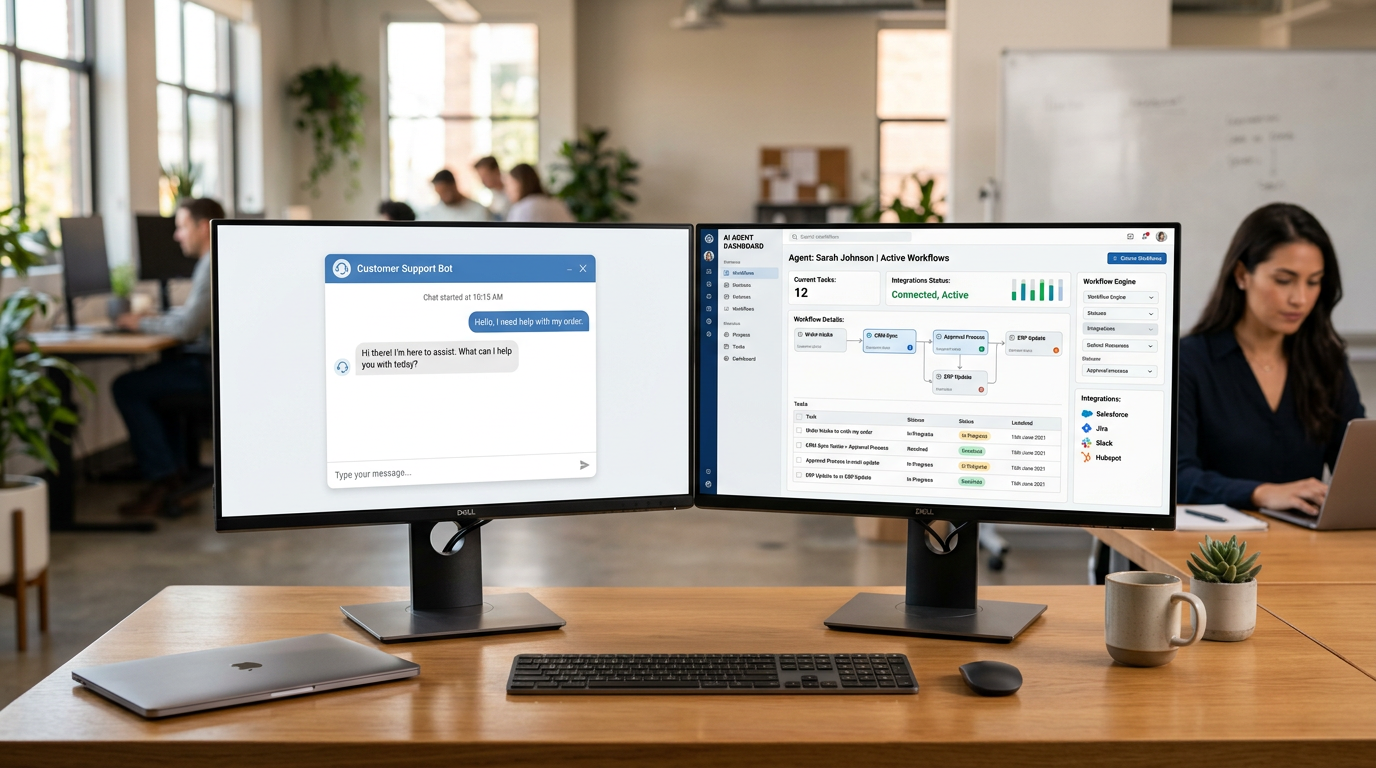
Core functionality is where the differences between AI agents and chatbots really stand out. Chatbots are reactive systems. They wait for user input, process the request, and deliver a response based on their programming or training data. This reactive nature means they can’t take action on their own or anticipate what users might need.
AI agents, though, work proactively and autonomously. They can monitor situations, spot opportunities, and take action without being explicitly told to. For example, an AI agent managing inventory might automatically reorder supplies when stock runs low, negotiate with suppliers, and update financial systems—all without human help. This shift from reactive assistance to proactive problem-solving is a game-changer.
Another key difference is learning ability. Traditional chatbots often need manual updates or retraining to handle new scenarios. They struggle with requests outside their programmed parameters. AI agents, on the other hand, use advanced machine learning to improve continuously. They analyze outcomes, adjust strategies, and expand their skills through experience.
Integration is another area where they differ. Chatbots usually connect to limited systems, like customer relationship platforms or knowledge bases. AI agents, however, can manage complex workflows across dozens of applications. They can pull data from multiple sources, perform analyses, execute transactions, and coordinate actions across entire tech ecosystems. This makes them invaluable for businesses using advanced AI tools available in 2026.
Processing and Response Mechanisms
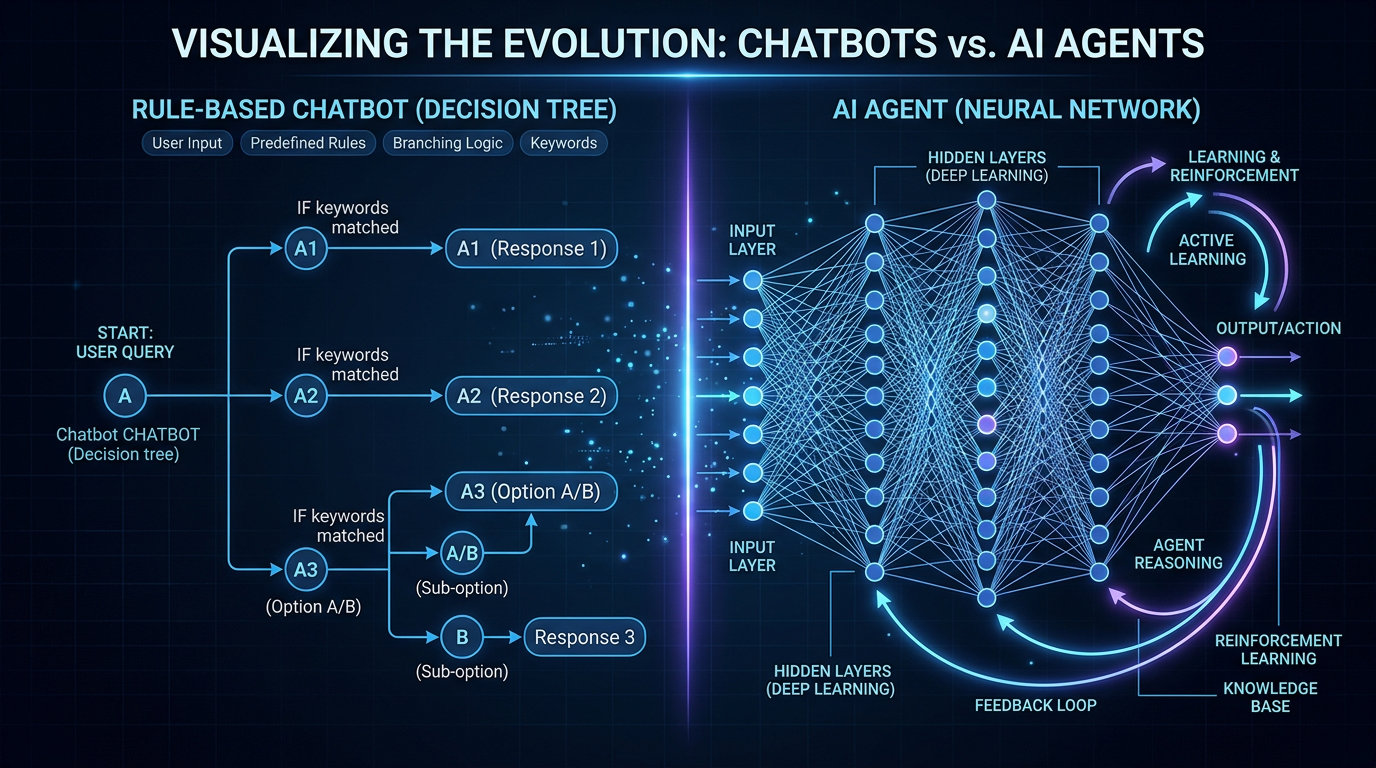
The way these technologies process information is another major difference. Chatbots usually rely on pattern matching or intent classification to understand user requests. They map inputs to pre-defined responses or pull information from databases. This works well for simple queries but falls apart with complex, multi-faceted requests.
AI agents use sophisticated reasoning engines that break down complex problems into manageable pieces. They evaluate multiple solutions, predict outcomes, and choose the best approach. Plus, they’re better at handling ambiguity and incomplete information than traditional chatbots. This advanced processing capability lets them tackle challenges that would overwhelm simpler systems.
Autonomy and Decision-Making Capabilities
Autonomy is perhaps the biggest difference between AI agents and chatbots. Chatbots require explicit programming for every scenario they might face. They can’t make independent decisions or adapt to unexpected situations without human help.
AI agents, however, have genuine autonomy. They can set sub-goals, plan action sequences, and adjust strategies as circumstances change. For instance, an AI agent handling customer support might escalate complex issues, coordinate with multiple departments, schedule follow-ups, and ensure resolution—all while keeping the customer informed. This level of autonomy transforms how businesses operate.
Decision-making is another area where they differ. Chatbots make simple if-then decisions based on rules or classification confidence scores. Their decision-making process is straightforward but inflexible. AI agents use sophisticated frameworks that consider multiple variables, weigh trade-offs, and optimize for specific objectives. They can handle uncertainty and make judgment calls similar to human employees.
AI agents also have contextual awareness that goes beyond individual conversations. They understand business contexts, user histories, and organizational goals. They recognize patterns across interactions and use insights to improve outcomes. This contextual intelligence lets them provide personalized experiences that evolve over time.
Learning and Adaptation
Learning mechanisms are another big differentiator. Most chatbots use static models that need periodic retraining by data scientists. They can’t learn from individual interactions in real time, so improving their performance takes significant human effort.
AI agents, though, use continuous learning systems that improve automatically. They analyze successful and unsuccessful interactions, spot improvement opportunities, and adjust their behavior accordingly. This self-improvement capability means AI agents become more valuable over time, while chatbots often stagnate without manual updates. Businesses using AI agents for small business operations benefit especially from this.
Use Cases: When to Choose Each
Choosing between chatbots and AI agents depends on your business needs and operational complexity. Chatbots are great for well-defined, repetitive tasks with limited variables. They work well for answering FAQs, providing business hours, or guiding users through simple processes like password resets.
Customer service scenarios with straightforward resolution paths are perfect for chatbots. For example, tracking order status, checking account balances, or booking appointments involve predictable workflows chatbots handle efficiently. Plus, chatbots are cost-effective for businesses with limited budgets or simple automation needs. Their simplicity means faster implementation and easier maintenance.
AI agents, however, are necessary when operations require real intelligence and autonomy. Complex customer issues involving multiple systems and decision points demand AI agents. Sales processes needing lead qualification, personalized recommendations, and multi-touch nurturing benefit hugely from AI agents. They can analyze customer behavior, spot opportunities, and execute sophisticated engagement strategies.
Operational workflows spanning multiple departments and systems are ideal for AI agents. Supply chain management, financial operations, and project coordination involve numerous variables and require adaptive decision-making. AI agents excel here because they can monitor conditions, anticipate problems, and coordinate complex responses across organizational boundaries.
Industry-Specific Applications
Different industries use these technologies in different ways. Healthcare organizations use chatbots for appointment scheduling and basic symptom checking, while deploying AI agents for patient monitoring, treatment coordination, and care pathway optimization. The autonomous nature of AI agents makes them invaluable for managing complex patient journeys.
Financial services use chatbots for routine banking inquiries but rely on AI agents for fraud detection, investment management, and loan processing. Retail businesses use chatbots for product information but deploy AI agents for inventory optimization, dynamic pricing, and personalized marketing campaigns.
Tech companies benefit from both tools. While chatbots can answer technical support questions, AI agents can manage entire development workflows. Similarly, content creators exploring AI video generation tools find that AI agents can orchestrate complete production pipelines, while chatbots just provide feature information.
The Future of Conversational AI
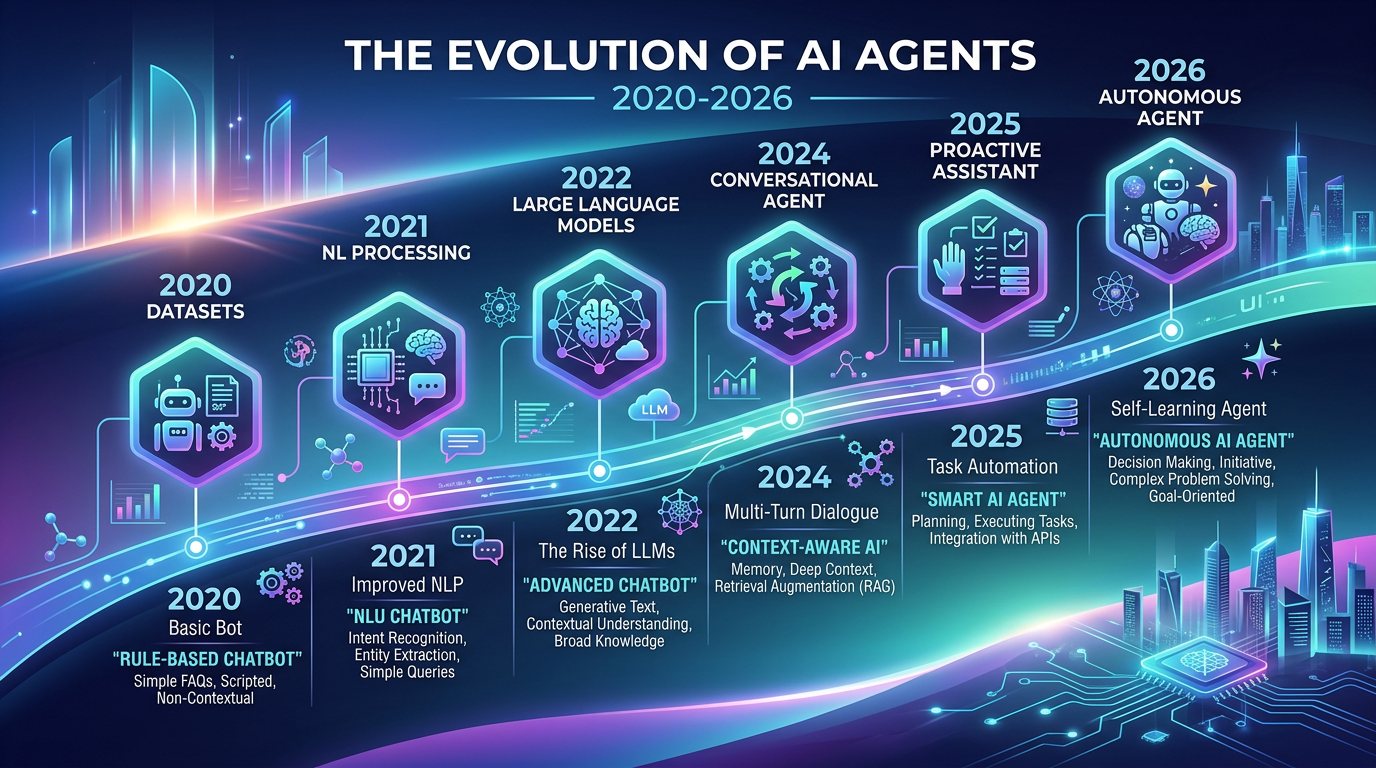
The conversational AI landscape keeps evolving rapidly. Industry analysts predict AI agents will increasingly replace traditional chatbots for most business applications. According to Gartner research, autonomous AI agents will handle 40% of enterprise automation tasks by 2028, up from just 15% in 2024.
This shift reflects growing recognition of chatbot limitations. Businesses increasingly demand systems that can handle complexity, adapt to change, and operate independently. As a result, investment in agentic AI technology has surged. Venture capital funding for AI agent platforms hit $8.3 billion in 2025, a 340% increase from 2023.
Still, chatbots won’t disappear entirely. They’ll evolve into more specialized tools for specific use cases where simplicity and predictability matter most. Many organizations will adopt hybrid approaches, using chatbots for initial triage and simple queries while escalating complex issues to AI agents. This tiered strategy optimizes costs while ensuring appropriate technology deployment.
Emerging Capabilities and Integration
New capabilities emerging in 2026 are blurring the lines between chatbots and AI agents. Advanced chatbots now include limited agentic features, while AI agents are developing more natural conversational abilities. This convergence creates a spectrum of conversational AI tools rather than rigid categories. Businesses need to evaluate specific capabilities rather than relying on labels.
Integration ecosystems are also expanding rapidly. Modern AI agents connect seamlessly with hundreds of enterprise applications, creating unified intelligence layers across organizations. They coordinate with other AI systems, including specialized tools for coding, content creation, and data analysis. Developers using AI coding assistants increasingly find these tools embedded within larger AI agent frameworks that manage entire development lifecycles.
Ethical considerations and governance frameworks are evolving too. As AI agents gain more autonomy, organizations are implementing guardrails to ensure responsible operation. Transparency requirements, audit trails, and human oversight mechanisms are becoming standard. Regulatory bodies worldwide are developing standards specifically addressing autonomous AI systems, shaping how businesses deploy these technologies.

Strategic Implementation Considerations
Organizations planning conversational AI implementations should carefully assess their needs. Start by mapping current processes and identifying pain points automation could address. Determine whether tasks require simple information retrieval or complex problem-solving. This analysis reveals whether chatbots or AI agents better suit your objectives.
Consider scalability requirements and growth trajectories. Chatbots may work initially but could need replacing as operations grow more complex. Starting with AI agents, despite higher upfront costs, often proves more economical long-term. Evaluate vendor ecosystems and integration capabilities to ensure chosen solutions align with existing tech stacks.
Training and change management deserve attention too. Employees need to understand how to work alongside AI systems effectively. Customers also need clear communication about when they’re interacting with automated systems versus human agents. Transparency builds trust and improves adoption rates for both chatbots and AI agents.
Frequently Asked Questions
What is the main difference between AI agents and chatbots?
The main difference lies in autonomy and capability. Chatbots are reactive systems that respond to user inputs based on predefined rules or training, handling simple, repetitive tasks. AI agents are autonomous systems that can perceive environments, make independent decisions, execute complex multi-step workflows, and learn continuously from experience. AI agents operate proactively and can manage sophisticated processes across multiple systems without constant human supervision.
Can chatbots become AI agents through updates?
Not typically through simple updates. The architectural differences between chatbots and AI agents are fundamental. Chatbots use relatively simple decision trees or classification models, while AI agents require sophisticated reasoning engines, planning capabilities, and integration frameworks. Transforming a chatbot into an AI agent usually requires rebuilding the system from the ground up rather than incremental improvements. However, some advanced chatbot platforms are evolving toward agentic capabilities.
Which technology is more cost-effective for small businesses?
Chatbots generally offer lower initial costs and work well for small businesses with straightforward needs like answering common questions or basic customer service. However, AI agents may prove more cost-effective long-term for businesses with complex operations, as they eliminate more manual work and improve continuously without requiring constant updates. Small businesses should evaluate their specific processes and growth plans when deciding which technology delivers better value.
Do AI agents completely replace human workers?
No, AI agents augment rather than replace human workers. They handle repetitive, data-intensive, or routine tasks, freeing humans for work requiring creativity, emotional intelligence, and complex judgment. Most successful implementations position AI agents as collaborative tools that enhance human capabilities. Organizations typically redeploy staff to higher-value activities rather than eliminating positions. Human oversight remains essential for ethical operation, strategic decisions, and handling exceptional situations.
How do I choose between a chatbot and an AI agent for my business?
Choose chatbots for well-defined, repetitive tasks with predictable workflows, such as FAQs, appointment scheduling, or simple information retrieval. Select AI agents when operations require decision-making, multi-system coordination, adaptive behavior, or continuous improvement. Consider factors including process complexity, integration requirements, budget, scalability needs, and strategic objectives. Many organizations benefit from hybrid approaches, using chatbots for simple interactions while deploying AI agents for complex processes.














No Comments