


AI agents for small business. AI agents are changing the game for small businesses, helping entrepreneurs tackle everything from daily operations to customer interactions and scaling efforts. These smart systems handle tasks, make decisions, and solve problems on their own, freeing up valuable time for business owners. Best of all, they’re no longer just for big corporations—small businesses can now tap into their power too.
Running a small business isn’t easy. Limited resources, tight schedules, and competing with bigger players can feel overwhelming. That’s where AI agents come in. They take care of repetitive tasks, giving owners more time to focus on growing their business. Plus, they’re affordable and accessible, making automation a realistic option for businesses of all sizes.
The world of business automation has come a long way. What was once reserved for Fortune 500 companies is now within reach for smaller operations. This shift means small businesses can finally use AI to level the playing field, streamline operations, and boost efficiency.
What Are AI Agents and How Do They Work
AI agents are smart software programs that perceive their surroundings, make decisions, and act to achieve specific goals. Unlike traditional software that follows strict rules, these agents learn from data and adapt over time. Depending on their design, they can operate with varying levels of independence.
At their core, AI agents rely on a few key components. They gather data about their environment through sensors or inputs, process it using machine learning algorithms, and then take action through outputs or system integrations. It’s like having a digital assistant that thinks on its feet.

There are different types of AI agents tailored for small businesses. Simple reflex agents react to immediate conditions with predefined rules. Model-based agents keep an internal map of their environment. Goal-based agents focus on specific objectives, and learning agents get smarter with experience.
These systems use technologies like natural language processing, machine learning, and computer vision. But don’t worry—you don’t need to be a tech wizard to use them. Many tools come with user-friendly interfaces and ready-to-go settings, so even beginners can get started quickly.
What sets AI agents apart from traditional automation is their ability to handle uncertainty and make smart decisions. For instance, while basic automation might send the same email to everyone, an AI agent analyzes customer behavior and tailors each message to the individual.
Top AI Agent Use Cases for Small Businesses
Customer service is a prime example of how AI agents can make a difference. Chatbots and virtual assistants handle common questions around the clock, slashing response times and keeping customers happy, even after hours. They can resolve straightforward issues instantly and pass tougher problems to human staff.
Sales and lead generation also get a boost from AI. These systems automatically qualify leads by analyzing website activity, email engagement, and demographic data. They can schedule appointments, send follow-ups, and nurture leads through the sales funnel, often boosting conversion rates while letting sales teams focus on closing deals.
Marketing automation powered by AI takes personalization to the next level. Agents segment audiences based on behavior, optimize email timing, and tweak content recommendations on the fly. They also analyze campaign performance and suggest improvements—all without manual input.
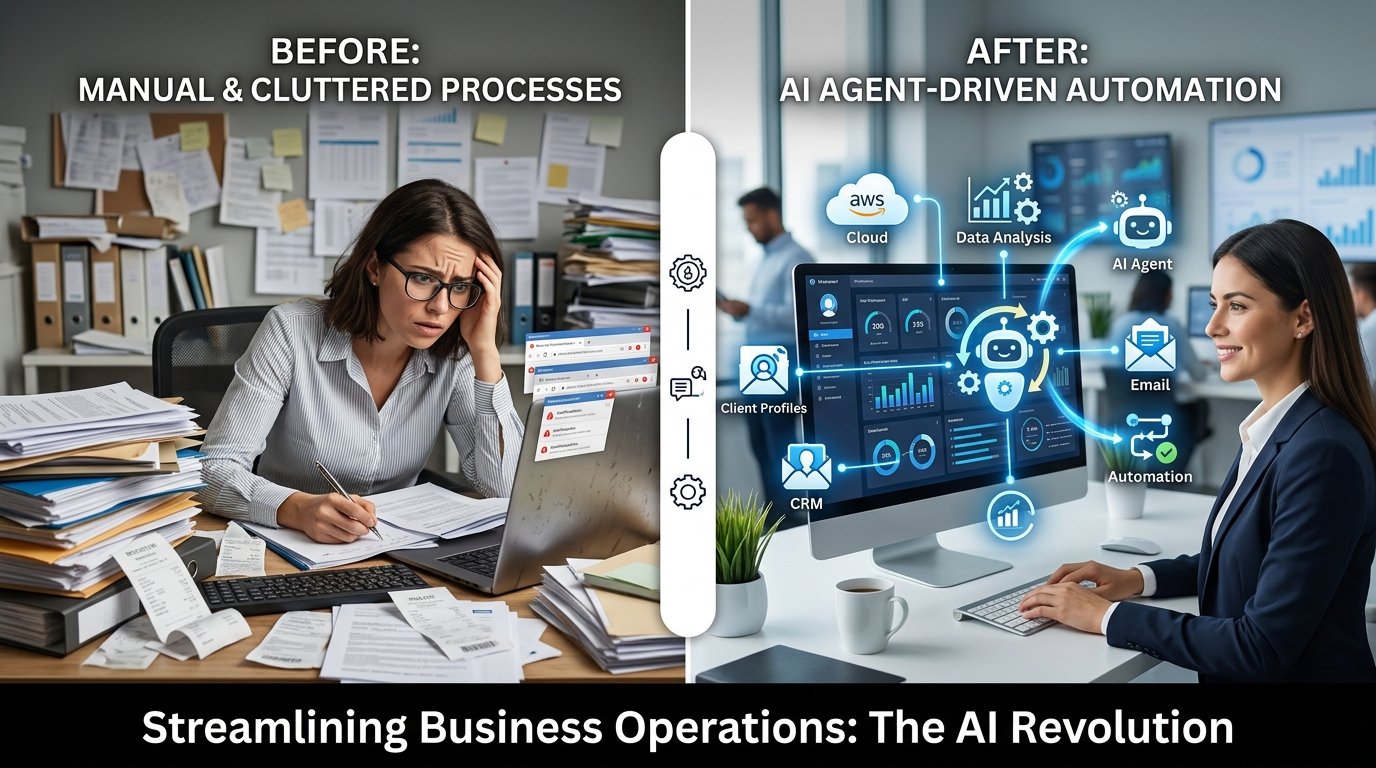
Administrative tasks eat up a lot of time for small business owners. AI agents can handle scheduling, data entry, invoice processing, and document management with ease. This means more hours in the week for strategic work—and fewer errors in routine tasks.
Financial management becomes more precise with AI agents tracking expenses, categorizing transactions, and generating reports. They can spot unusual spending, predict cash flow issues, and recommend budget adjustments. Plus, they help keep tax records organized and compliant.
Inventory management gets smarter with AI agents tracking stock levels, predicting demand, and automating reorders. They analyze sales trends, seasonal patterns, and other factors to optimize inventory, reducing costs and preventing shortages.
HR tasks also benefit from AI. These systems can screen resumes, schedule interviews, and onboard new hires. They handle common HR questions, manage time-off requests, and track performance metrics, though they still rely on human judgment for sensitive decisions.
Best AI Agent Platforms for Small Business Owners
Choosing the right platform depends on your business needs and technical know-how. Here are a few standout options that cater to small businesses with accessibility, affordability, and robust features.
Zapier connects thousands of apps without requiring coding skills. It lets businesses create AI-powered workflows that automate tasks across multiple tools. The interface is user-friendly, and it offers a free tier with basic functionality—paid plans grow with your business.
Microsoft Power Automate integrates smoothly with Microsoft 365 and other apps. It comes with pre-built AI features for document processing, sentiment analysis, and predictions. Whether you’re in the cloud or on desktop, it’s a solid choice for businesses already using Microsoft products.
ChatGPT and similar conversational AI platforms can be integrated into operations via APIs. They’re great for handling customer inquiries, generating content, and assisting with research. Pairing them with free AI tools can unlock even more functionality.
HubSpot offers an all-in-one platform with built-in AI agents for marketing, sales, and customer service. From chatbots to email automation and lead scoring, it’s packed with machine learning features. It scales from free tools for startups to enterprise-level solutions, making it versatile for growing businesses.
Intercom specializes in customer communication with AI-powered chatbots and messaging systems. It handles support, product tours, and targeted messaging automatically, learning from interactions to improve responses over time.
Make (formerly Integromat) provides visual automation building with advanced logic and data manipulation. It’s more complex than Zapier but still accessible for small businesses. Its AI and machine learning modules allow for sophisticated workflows.
When choosing a platform, consider integration capabilities, ease of use, scalability, and pricing. Most offer free trials, so you can test drive before committing. Look for robust community support and documentation—they’ll be lifesavers during implementation.
AI Agents for Small Business: Implementation Guide
Implementing AI agents takes careful planning. Here’s how to ensure a smooth rollout and maximize your ROI.
Start by pinpointing pain points and repetitive tasks that eat up your time. Document these processes thoroughly, including inputs, outputs, and decision points. This helps identify what’s ripe for automation and sets benchmarks for measuring success.
Set clear, measurable goals for your AI agent implementation. Decide what success looks like—whether it’s faster response times, more conversions, or saved hours. Be realistic about timelines, and don’t try to automate everything at once.
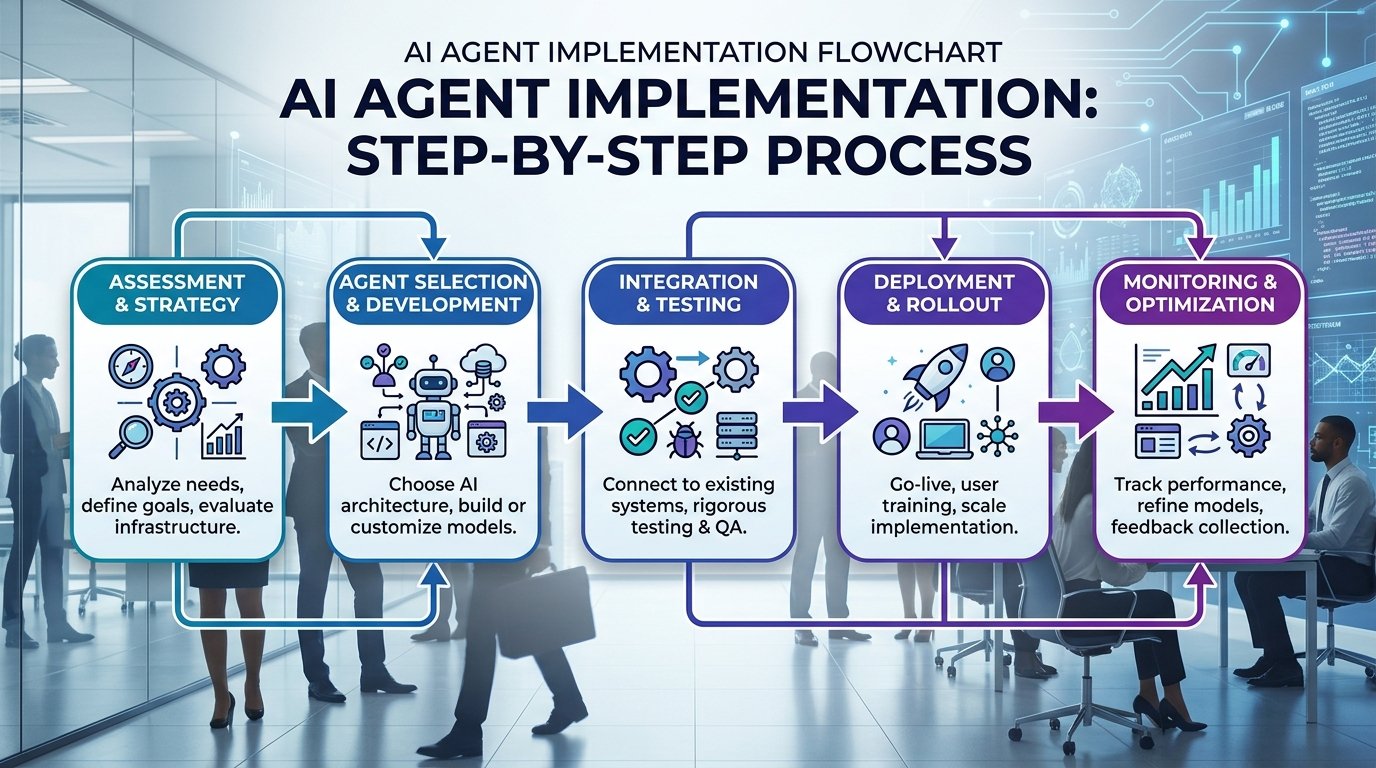
Research platforms that fit your needs and technical skills. Use free trials to test them out with real-world scenarios. Consider factors like data security, compliance, and vendor reliability. Look for reviews from businesses similar to yours.
Start with a pilot project focused on one process or department. This minimizes risk and gives you a chance to learn before scaling up. Pick a project that’s high-impact but not overly complicated.
Prepare your team by explaining how AI agents will support—not replace—their work. Offer training on new tools and processes, and emphasize the benefits, like fewer tedious tasks. Find champions within your team who can help others adapt.
Configure your AI agents to fit your business needs. Most platforms offer templates and workflows you can customize. Take the time to set them up properly so they understand your context and rules. Test thoroughly before rolling them out.
Monitor performance closely after deployment. Track both technical metrics and business outcomes, and gather feedback from your team and customers. This helps you spot issues quickly and make adjustments as needed.
Scale gradually by expanding successful implementations to other areas. Document best practices and lessons learned to make future projects smoother. Stay updated on new features—AI evolves fast, and regular reviews ensure your agents stay effective.
Data quality is key to AI agent performance. Make sure your data is accurate, complete, and well-organized. If you’re not already, consider organizing digital files systematically. Clean data lets agents make better decisions and deliver better results.
Cost Analysis and ROI of AI Agents
Understanding the financial side of AI agents helps small businesses make smart investment decisions. Costs typically include platform fees, implementation expenses, and ongoing maintenance.
Most AI agent platforms use subscription pricing. Entry-level plans start around $10 to $50 per month, while mid-tier plans range from $100 to $500. Enterprise solutions can cost $1,000 or more, but they’re still cheaper than hiring extra staff.
Implementation costs vary based on complexity. Simple setups using no-code platforms might just require time. More complex projects could need professional services, costing anywhere from $1,000 to $10,000. Many businesses start with basic setups that require minimal upfront investment.
Calculate potential savings by identifying manual tasks your team handles. Multiply the hours spent by your labor costs. For example, if customer service staff spend 20 hours a week on routine inquiries at $20/hour, that’s $20,800 a year. An AI agent handling 70% of these could save around $14,560 annually.
AI agents can also boost revenue. Businesses often see 10-30% improvements in lead conversion rates with AI-powered sales agents. And 24/7 customer service availability can increase sales opportunities and improve customer satisfaction.
Productivity gains are another big win. Employees freed from repetitive tasks can focus on higher-value work, boosting output without adding headcount. This efficiency helps small businesses compete with larger rivals.
Risk reduction and accuracy also pay off. AI agents minimize errors in data entry, calculations, and processes, helping businesses avoid costly mistakes and compliance issues.
Most small businesses see positive ROI within 3-12 months of implementing AI agents. The timeline depends on factors like implementation costs and adoption rates. Returns often accelerate as businesses expand AI usage.
When calculating ROI, consider both tangible and intangible benefits. While cost savings and revenue increases are easy to measure, improved employee satisfaction and customer experience also add value. Faster response times and personalized service give businesses a competitive edge.
Compare AI agent costs to alternatives like hiring staff or outsourcing. A $200/month customer service AI provides 24/7 coverage equivalent to multiple full-time employees, making it a clear winner when you factor in training, benefits, and management overhead.
According to McKinsey research, generative AI and autonomous agents could add trillions to the global economy. Small businesses that adopt these technologies early position themselves for growth and competitiveness.
Frequently Asked Questions
Do I need technical expertise to use AI agents for small business?
Not really. Most AI agent platforms are designed for non-technical users, with intuitive interfaces, templates, and drag-and-drop features. Basic computer skills and a willingness to learn are helpful, though. Tutorials, documentation, and customer support are usually available to guide you.
How long does it take to implement AI agents in a small business?
It depends on complexity. Simple chatbots or email automation can be up and running in days. More complex setups involving multiple systems might take weeks. Achieving optimal performance often takes 1-3 months as you refine configurations based on real-world results. Start small and grow gradually.
Are AI agents secure enough for handling sensitive business data?
Reputable platforms use strong security measures like encryption, access controls, and compliance certifications. Still, evaluate security features carefully and choose vendors that meet your requirements. Implement proper data governance practices and limit agent access to only what’s necessary. Most platforms comply with standards like GDPR and SOC 2.
Can AI agents replace human employees in small businesses?
Not really. AI agents are best at handling repetitive, time-consuming tasks, freeing up humans to focus on creative, empathetic, and complex work. Businesses typically see productivity boosts rather than layoffs. AI works best when paired with human expertise and oversight.
What happens if an AI agent makes a mistake?
Mistakes can happen, especially early on or in unusual situations. That’s why it’s important to have oversight mechanisms, testing protocols, and fallback procedures in place. Most platforms let you review agent actions and tweak parameters. Agents usually improve over time through learning and refinement. Start with low-risk applications and build confidence gradually.















No Comments